
Alcohol, Bipolar and Drinking in the Dark
Alcohol, Bipolar and Drinking in the Dark
I need to tell you something that's been eating at me. Two weeks ago, I dropped an episode where I was really struggling. I'd hurt someone I love deeply, and I was wrestling with a question that haunts a lot of people with bipolar disorder: How do I know if my behavior is coming from my own selfish weaknesses or from my bipolar disorder? How do I discern what's what?
That episode led me down a path of real honesty about something I've been avoiding for months. And today, I need to talk about it because I think there are people listening who are in the same place I was.
I'm talking about alcohol.
The Pattern: Sitting in the Dark
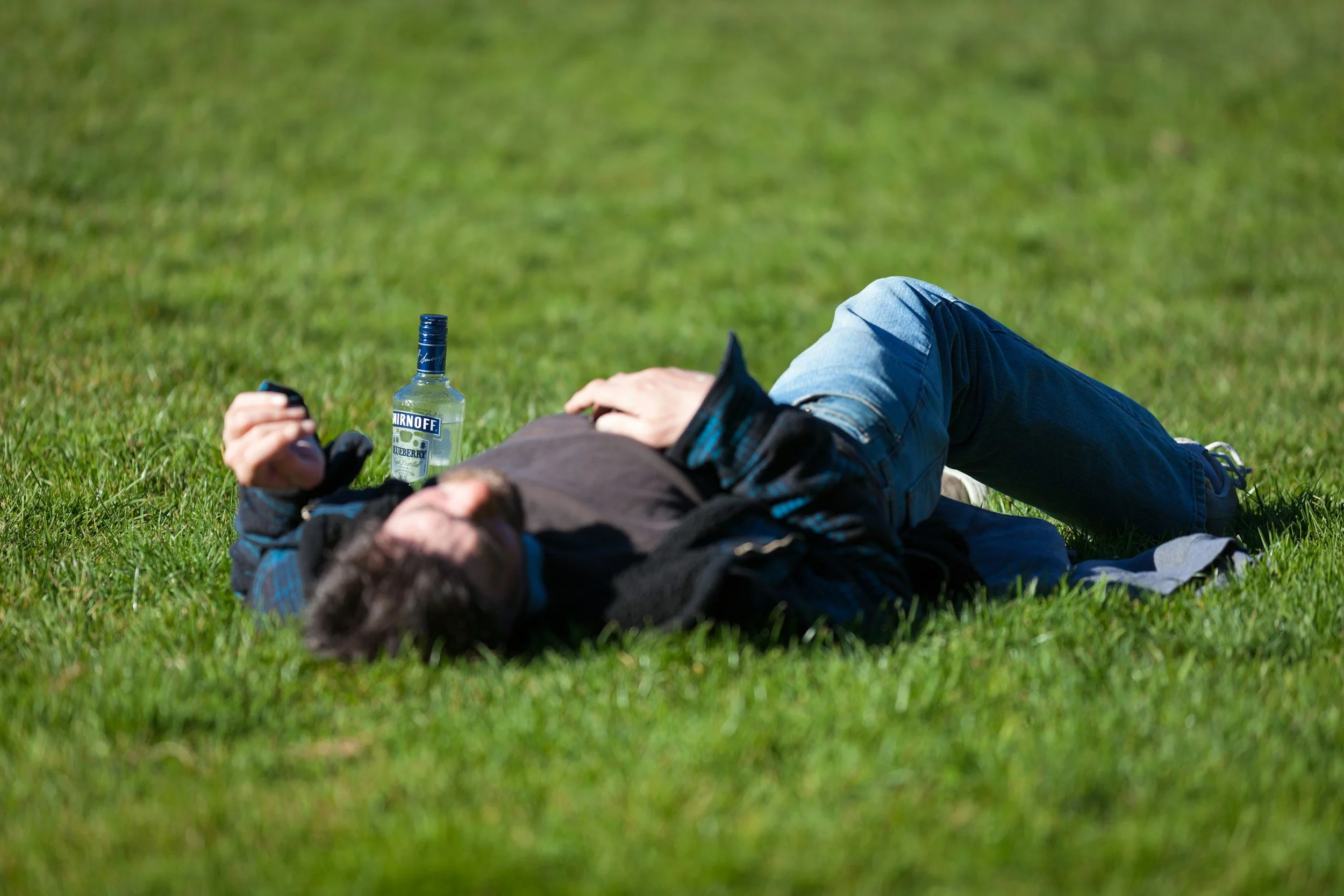
Over the last couple of months, I fell into a cyclic pattern with alcohol. Every single day, I'd sit in my podcast studio in the dark, watching TV by myself, having one or two wines. Just one or two. Nothing that would make me abusive or crazy or visibly drunk. Just... mediocre. Defeated. Stuck.
I wasn't moving forward. I wasn't growing. I was just existing in this holding pattern of quiet self-medication.
And here's the thing: I knew it was bad. Every doctor who treats bipolar disorder will tell you the same thing. Pretty much 100% of them say alcohol is a terrible idea when you have bipolar. But I was doing it anyway.
Why? Because it worked. Sort of.
The Science: Why Alcohol and Bipolar Are Enemies
When you have bipolar disorder, your brain chemistry is already complicated. Alcohol is a depressant, so when I drank, it would bring down my heightened anxiety state and make me feel... normal. Level. Like I could breathe.
But that's the trap. It works temporarily. It's a holding pattern. It's not a solution.
Here's what alcohol actually does to a bipolar brain: It directly affects your brain chemistry. And because our brains are wired differently than other people's brains, alcohol doesn't just make us depressed—it can actually trigger manic episodes.
I know that sounds counterintuitive. A depressant causing mania? But that's exactly what happened to me. I'd drink at night thinking it was bringing me down. Then I'd have disrupted sleep. Poor sleep. And the next day, my brain chemistry would be wrecked, triggering mood swings and manic episodes.
So I'd have days where I'd be moping around the house for three or four days straight, knowing full well the alcohol was contributing to it, but not stopping. And then other days where I'd be manic, and it was directly tied to my brain chemistry being destroyed the day before.
It's a vicious cycle. And I was trapped in it.
The Real Cost: Family
The worst part wasn't what it did to me. It was what it did to my family.
When I was sitting in that dark studio every night with my wines, Jess was watching it happen. She could see exactly what was going on. She could see that the alcohol was contributing to my manic episodes. She could see that it was affecting my medications. She could see that it was making me less present, less stable, less myself.
And it was hurting her. It was hurting my kids.
Jess told me something that hit me hard. When she was pregnant with gestational diabetes, the doctor told her to give up the foods she loved—Hungry Jacks, white bread, all the things that spike insulin. And even though she hated it, she did it. Not because she wanted to. But because if she didn't, it would negatively affect the baby she loved.
"That's the principle here," she said to me. "You're free to drink. But your freedom is affecting people you love."
And she was right. I am free. There's nothing in the Bible that forbids alcohol. Jesus drank wine. I'm not a legalist trying to earn my salvation through abstinence. But there's a higher calling. There's a principle that says: when your freedom is hurting the people you love, maybe it's time to choose something different.
The Medications: A Dangerous Mix
Here's another layer that made this even worse: alcohol directly interferes with the medications I take for bipolar.
I'm on sodium valproate, a mood stabilizer that was originally developed for epilepsy but works for bipolar too. When you mix alcohol with mood stabilizers, it's not good.
I'm also on Seroquel, an antipsychotic. This drug is heavy. Like, I take it and I'm asleep in an hour. My legs feel almost legless. It's strong. And when you mix that with alcohol? Your alcohol is fighting against your antipsychotics while you're asleep. You wake up and the medication hasn't had the effect it needs to have.
I found that when I was drinking most afternoons in the studio by myself, my antipsychotics weren't working as well. So I kept having to increase the dose. And increase it again. And again.
It affects you on every level.
The Reckoning: What Sort of Guy Am I?
Two weeks ago, I hit a wall. A real wall. It was like a crossroads in my life. And I had to ask myself a hard question: What sort of guy am I?
What sort of Christian am I if I know something is hurting me and hurting the people I love, and I keep doing it anyway?
I'm not saying I was in sin to the point where I should have been removed from church or anything. I was just in a holding pattern. Living in a pattern that wasn't my best. Not being my best.
But then I thought about all the other things I've been doing that are exacerbating my bipolar. The sugar. The processed carbs. The caffeine. Up until a couple of weeks ago, I was drinking five double espressos a day. Five. And then wondering why I was anxious. Wondering why my heart rate was elevated. Wondering why I was waking up manic.
It's stupidity. It's madness.
And so much of it is manageable. Not through willpower or self-punishment or earning my way into the kingdom. But through making choices that honor my body and my family and my calling.
Short-Term Relief vs. Long-Term Strategy
I've been reading a book by Julie Fast, who is both a healthcare professional and someone who lives with bipolar disorder. She talks about something that's been transformative for me: the difference between short-term relief and long-term strategy.
Short-term relief is two wines at night. It feels good in the moment. It brings you down. It makes you feel normal.
Long-term strategy is figuring out how to live without alcohol and still flourish. It's getting into a structured rhythm with sleep and treatment and doctor support and healthy eating. It's preventing the manic episodes instead of trying to control them after they happen.
And here's what Julie says: if you can prevent a manic episode, if you can prevent a mood swing, if you can prevent a crisis—that's far more effective than trying to manage a full-blown episode.
Prevention is everything.
The Identity Trap
Julie also talks about something that's been huge for me: separating the illness from the person.
I am not bipolar Dave. I am Dave with bipolar.
But somehow, even though I knew that intellectually, it crept back in. I started seeing myself as bipolar. Like it was my identity. Like it was who I am.
And that's not true. My identity is not my illness. My identity is not my mental health. My identity is not my job or my success or my failures.
My identity is that I'm a son of Christ. That's it. That's the only thing I want to be identified by.
And when I'm making choices that are exacerbating my illness—drinking alcohol, consuming sugar, pounding espressos—I'm not honoring that identity. I'm not honoring the person God made me to be.
The Decision: Drawing a Line in the Sand
So here's where I'm at. I called a mate who runs an AA group this week. Just to debrief. And hearing his story—how different he is now compared to a year and a half ago, how much can change when you really commit to getting better—it was inspirational.
And I realized: I need to throw the kitchen sink at this.
I need to make a decision. Draw a line in the sand. And move forward.
If alcohol is messing with my antipsychotics, I need to stop drinking alcohol.
If sugar is spiking me into mania, I need to get rid of the sugar.
If processed carbs are wrecking my brain chemistry, I need to find alternatives.
And the good news? There are so many alternatives now. It's not like 30 years ago where you were just stuck. There's keto stuff, there's clean eating, there's every provision you could need.
I'm 45 years old. I've spent decades thinking this was all gobbledygook. That you could eat whatever you want and smash as many coffees as you could in a day. But I was wrong.
And I'm done with that version of Dave.
For Anyone Listening
If you're struggling with alcohol and mental illness, I want you to know something: this isn't about shame. It's not about legalism. It's not about earning your way into God's favour.
It's about choosing the higher calling. It's about remembering that you're part of a community, part of a family, part of the people of God. And at any time, you can choose to live that higher calling.
Mental illness is not a character flaw. Struggling with mental illness doesn't make you weak. Most of the time it's genetic. It's not your fault.
But if you get to a place where you can move forward—where you can make choices that honor your body and your family and your calling—that's fantastic. That's even better.
And you don't have to do it alone. God wants to bless you in this. We can do all things through Christ who strengthens us. And if we put faith in Him, He can help us.
Even if the illness isn't lifted. Even if you still struggle. I'd rather do it with God, knowing that He's involved in the mental illness, rather than trying to go it alone.
Listen to the Full Episode
Listen on Spotify | Listen on Apple Podcasts | Listen on YouTube
About Dave Quak
Dave Quak is a pastor, podcaster, and founder of Sunburnt Souls—a Christian mental health ministry. He's open about his journey with bipolar disorder, anxiety, and depression. Dave is married to Jess, has two kids, and is committed to helping people navigate faith and mental health together. He believes that hope in the mess is real.
Key Takeaways
•Alcohol and bipolar have a complicated, dangerous relationship. It directly affects brain chemistry and can trigger both depressive and manic episodes.
•Short-term relief isn't worth long-term damage. The temporary comfort of self-medication costs far more than it provides.
•Your freedom has limits when it affects people you love. There's a higher calling to consider the impact on your family.
•Alcohol interferes with bipolar medications. Mixing alcohol with mood stabilizers, antidepressants, and antipsychotics is dangerous and counterproductive.
•Prevention is more effective than management. Preventing a manic episode is far better than trying to control one after it happens.
•Separate the illness from the person. You are not your bipolar. You are a person with bipolar. Your identity is in Christ alone.
•You're not alone in this struggle. There are tools, resources, and people who understand what you're going through.
•It's never too late to draw a line in the sand. You can choose a different path starting today.
Reflection Questions
As you sit with Dave's story, consider:
1.Are you using anything—alcohol, food, caffeine, work—as short-term relief from your mental health struggles? What would long-term strategy look like for you?
2.How is your struggle affecting the people you love? What would it cost them if you continued on the current path?
3.What's one choice you could make today that would honor your body and your family? What's stopping you from making it?
4.How has your mental illness become part of your identity? What would it feel like to separate who you are from what you struggle with?
5.Who could you reach out to for support? (A doctor, a counselor, a friend, a support group, God)
More Stories Like This
Sunburnt Souls is a Christian mental health podcast dedicated to exploring faith, mental health, and what it means to follow Jesus in a broken world. We believe that hope in the mess is real—and that your faith and your mental health both matter.
Explore more stories of faith, resilience, and hope on the Sunburnt Souls Stories page.