
Suffering, Anxiety and Christian Meditation: Finding Peace in Pain with Dr. Joshua Knabb
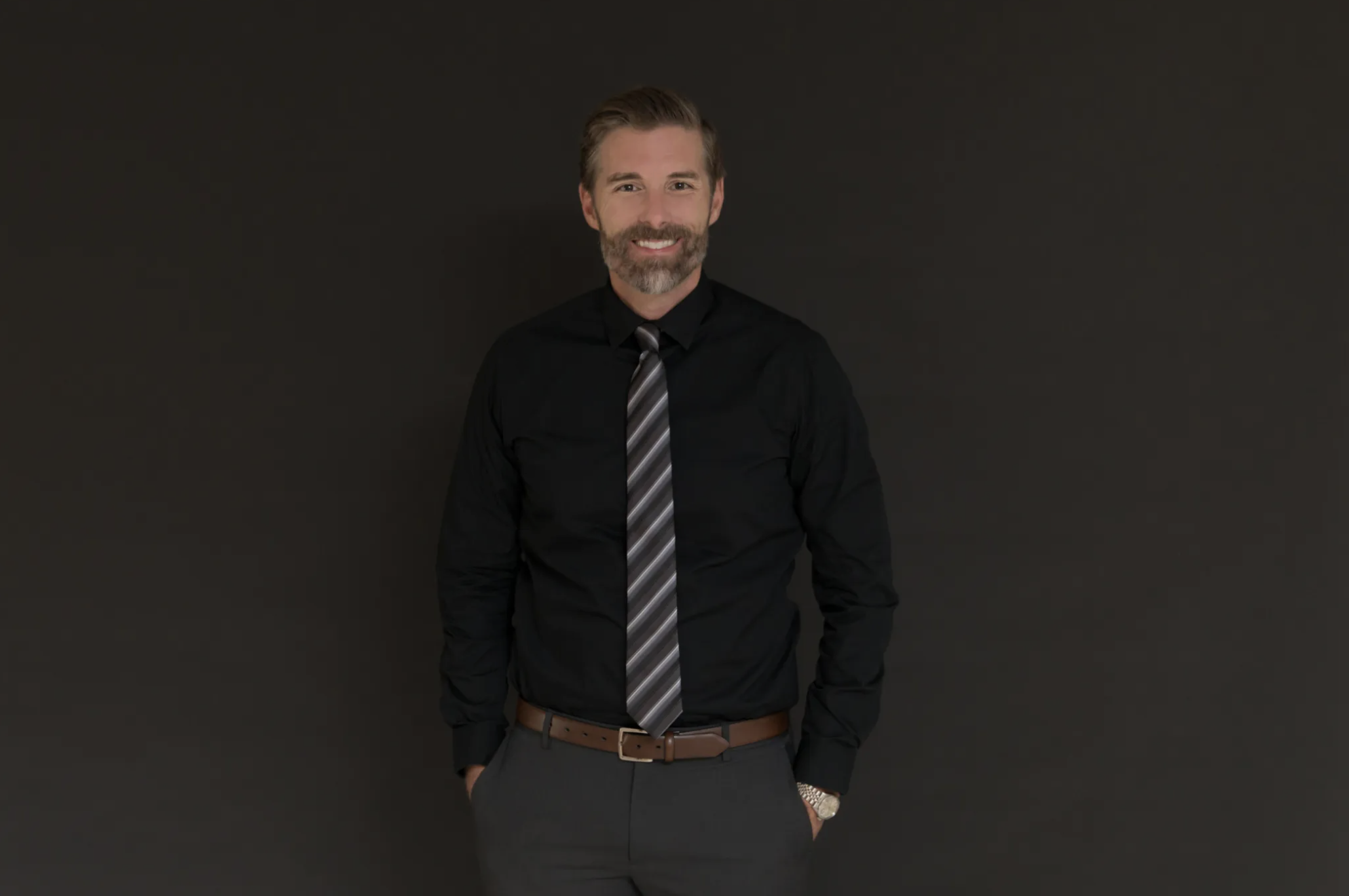
Suffering, Anxiety and Christian Meditation: Finding Peace in Pain with Dr. Joshua Knabb
When Dr. Joshua Knabb was 12 years old, his father left. It wasn't a gradual fade or a distant separation. It was a midlife crisis, an affair, a new family. It was the shattering of everything he thought he understood about God, faith, and the world.
"My worldview was in pieces," Joshua recalls. "I was in a lot of pain early on in life. It was traumatising for me. I went through depression and anxiety."
But that shattered worldview became the foundation for something remarkable. It led him to ask the questions that would eventually define his life's work: Could his Christian faith make sense of suffering? Was there a path forward through the pain?
Today, Dr. Joshua Knabb is a clinical psychologist, author, university professor, and founder of The Christian Psychologist podcast. He's dedicated his career to answering those questions—not from an ivory tower, but from the ground level, walking alongside people who are suffering.
And his message is radical: Pain is not the enemy. Running from it is.
The Worldview That Broke—And How It Healed
Joshua grew up in a conservative evangelical Protestant home. His parents were first-generation Christians, and he inherited a worldview that felt unshakable. Impenetrable. Confident.
Until it wasn't.
When his father left, Joshua stopped going to church. He was searching for answers the church couldn't seem to provide. But he found something unexpected: a Christian therapist who helped him process his emotions, make sense of his pain, and put the pieces back together.
That experience changed everything. It led him to graduate school, to a doctorate in clinical psychology from a Christian university, and eventually to a calling: to help the church grapple with suffering in ways it hadn't before.
"I didn't find in my adolescence and young adulthood that the church gave me real answers to suffering," Joshua explains. "At best it was sort of like, 'Go see the therapist down the road.' But I wanted to grapple with suffering within the four walls of the church."
The Mindfulness Question: Reclaiming Christian Tradition
During his supervised hours for licensure at a Christian psychiatric hospital, Joshua noticed something that troubled him. Mindfulness was everywhere. In clinical psychology. In schools. In corporations. In churches.
Mindfulness, which comes from the Buddhist tradition, had become the default practice for managing anxiety, stress, and emotional pain.
So Joshua asked a simple question: If mindfulness is so popular in the United States, why is it so popular when less than 1% of Americans identify as Buddhist?
And a follow-up question: Does the Christian tradition offer practices that are more anchored to Scripture and Christian writings so that Christians can draw from our own tradition?
That question sent him on a journey backward through centuries of Christian practice. He discovered centering prayer, developed by Trappist monks in the 1970s. But that led him further back to the Cloud of Unknowing. And that led him to Scripture itself—to meditation in Scripture, to the desert fathers and mothers, to Puritan meditation practices.
"It opened up this whole tradition," Joshua says. "We have our own deep contemplative practices rooted in Scripture and Christian history. We don't need to borrow from Buddhism. We can draw from our own well."
The Radical Truth: Pain Points to What We Value
Here's where Joshua's message becomes truly transformative. In a culture obsessed with happiness, comfort, and the avoidance of pain, he offers a counterintuitive truth:
Emotional pain is not a problem to be solved. It's a signal to be understood.
"Pursuing pleasure and avoiding pain just doesn't work," Joshua explains. "When pain comes knocking on our door, what do we do? I tried to avoid it, to anesthetise it. It didn't work. It made life worse."
Instead, Joshua discovered something in Scripture that the church often misses: the full spectrum of emotional life. The Lament Psalms. Jeremiah, the weeping prophet. Jesus weeping. Example after example of people who didn't hide their pain—they brought it to God.
"Our emotions are God-given signals," Joshua says. "They help us understand life and enrich life—even emotional pain."
Here's the framework Joshua uses to help people understand their emotions:
•Sadness tells us we've lost something important. It calls us to slow down and grieve that loss intentionally, rather than rushing to replace it.
•Fear tells us we're in danger in the present moment. It's a protective signal.
•Anxiety tells us we're anticipating danger ahead. It's not sin—even Jesus experienced it in the garden.
One clinical psychologist describes emotional pain as a two-sided coin. On one side is the pain. On the other side is our values. Our pain points us to what we value.
"When I try to wall off my emotional pain, it prevents me from understanding life in deeper ways," Joshua explains. "But when I lean into it, when I listen to what it's telling me, I discover what I actually care about."
The Paradigm Shift: God Is Present in the Pain, Not Absent From It
Joshua remembers a pivotal moment in his own therapy. He was struggling with anxiety—something he experiences regularly—and he asked his therapist to help the anxiety go away.
His therapist leaned in and asked: "What if your anxiety is trying to tell you something?"
It was a paradigm-shifting moment. From childhood, Joshua had been taught to avoid pain. From church, he'd often received the message that emotional pain revealed sin or weakness, that it needed to be eliminated.
But in that moment, something shifted.
"Maybe I need to listen more to the pain I'm going through," Joshua realised. "Maybe God isn't absent in the pain, but present in the pain."
This is the heart of Joshua's message to the church: We don't need to be free from pain to be whole. We need to be present with our pain, and present with God in the midst of it.
Psalm 88: Sitting in Darkness Without Resolution
Dave Quak asks Joshua about Psalm 88—a psalm that doesn't end in victory or resolution. It ends in darkness. It ends with the psalmist crying out to God and receiving no answer.
"Sometimes our Christian messages don't end in the beautiful prayer time with somebody crying and recommitting their lives to Jesus," Dave observes. "Sometimes they're just still stuck in the darkness."
Joshua's response is profound. He references Walter Brueggemann's framework of the Psalms: psalms of orientation (praise and gratitude), disorientation (lament and struggle), and new orientation (restoration and hope).
"There are seasons of life," Joshua explains. "Seasons of praise and gratitude. Seasons of struggle and darkness. And seasons of restoration. The Psalms capture the full spectrum of emotional life. And sometimes we're stuck in the darkness. That's okay. God is there too."
This is revolutionary for many Christians who've been taught that faith means always being in the "new orientation" phase—always victorious, always praising, always certain.
But Joshua's message is: Your darkness is valid. Your struggle is valid. God doesn't abandon you in Psalm 88. He's there in the darkness too.
Christian Mental Health: Empowered by the Holy Spirit to Walk Home to the Father
Joshua offers a definition of Christian mental health that's rooted in the Trinity: To be empowered by the Holy Spirit to walk with the Son home to the Father.
Drawing from Puritan theologian John Owen, Joshua explains that in the Christian life:
•The Holy Spirit offers comfort
•The Son offers grace
•The Father offers love
"We have the Holy Spirit dwelling within, who helps us to be more like Christ as we walk through suffering on this side of heaven," Joshua says. "But we're heading to a destination—to be face to face with God, what theologians call the beatific vision. This life, we can get through suffering because of what's next for us. And that gives us hope."
This isn't escapism. It's not ignoring pain or pretending everything is fine. It's grounding our present suffering in a future hope—the promise that one day there will be no more tears, no more suffering, no more pain.
Why He Stays on the Ground: Leading by Example
Despite his academic credentials, his podcasts, his books, his university teaching position, Joshua refuses to withdraw from direct clinical practice. He still sees clients one-on-one. He still sits with people in their pain.
Why?
"I've always felt called to help the church," Joshua explains. "I want to lead by example and help people see that even a psychologist suffers and doesn't have it all figured out. We're really walking together through suffering."
This is the prophetic witness the church needs: leaders who aren't pretending to have it all figured out. Leaders who are honest about their own struggles. Leaders who walk alongside people rather than standing above them.
"What greater way to evangelise to non-Christian communities than to say that we understand suffering and we have the antidote to suffering?" Joshua asks. "Not that we're free from it on this side of heaven, but that eventually there will be no more tears, no more suffering. And in the meantime, God is with us."
The Practice: Christian Meditation and Contemplative Prayer
Throughout our conversation, Joshua emphasises that Christian mental health isn't just about understanding suffering intellectually. It's about practicing presence with God.
Christian meditation. Centering prayer. Lectio divina. These aren't exotic practices borrowed from other traditions. They're rooted in Scripture and centuries of Christian practice.
"We have our own tradition," Joshua reminds us. "We can draw from the desert fathers and mothers. From Puritan meditation. From Scripture itself. These practices help us to be present with God, to listen to what He's saying, to process our emotions in His presence."
This is where hope enters. Not false hope that denies pain. But real hope—the kind that sits with you in darkness and whispers, "God is here too."
Listen to the Full Episode
Listen on Spotify | Listen on Apple Podcasts | Listen on YouTube
About Dr. Joshua Knabb
Dr. Joshua Knabb is a clinical psychologist, author, and founder of The Christian Psychologist podcast. He holds a doctorate in clinical psychology from a Christian university and specialises in the integration of Christian theology and psychological practice. Joshua teaches at a university level, maintains a private practice, and is passionate about equipping the church to understand and grapple with suffering through a Christian lens. He's the author of several books on Christian mental health and contemplative practices.
Key Takeaways
•Pain is not the enemy—running from it is. When we avoid emotional pain, we make life worse. When we lean into it, we discover what we value.
•Your emotions are God-given signals. Sadness, fear, anxiety—they all have wisdom to offer. The question isn't how to eliminate them, but how to listen to them.
•God is present in the darkness, not absent from it. Psalm 88 ends in darkness, and that's okay. God doesn't abandon us in our struggle.
•The Christian tradition has its own contemplative practices. We don't need to borrow mindfulness from Buddhism. We have centering prayer, lectio divina, and centuries of Christian meditation practices.
•Christian mental health is about being empowered by the Holy Spirit to walk with the Son home to the Father. It's not about being free from pain, but about having hope in the midst of it.
•Leaders who walk alongside people are more powerful than leaders who stand above them. Joshua's commitment to staying in clinical practice while teaching and writing models what it means to be present with others' suffering.
•Suffering can be redemptive. When we process our pain with God, it becomes a pathway to deeper faith, deeper compassion, and deeper understanding of what it means to follow Christ.
Reflection Questions
As you sit with Joshua's story, consider:
1.What pain have you been trying to avoid? What would it look like to lean into it instead?
2.What is your emotional pain pointing you toward? What do your emotions reveal about what you value?
3.How has the church's message about suffering affected your faith? Has it been helpful? Harmful? Incomplete?
4.Do you experience anxiety? What would it mean to listen to your anxiety instead of trying to eliminate it?
5.Where are you stuck in darkness right now? How might God be present in that darkness?
6.What Christian contemplative practices have you experienced? How might centering prayer or lectio divina help you process your emotions?
7.Who in your life needs to hear that God is present in their pain, not absent from it?
More Stories Like This
Sunburnt Souls is a Christian mental health podcast dedicated to exploring faith, mental health, and what it means to follow Jesus in a broken world. We believe that hope in the mess is real—and that your faith and your mental health both matter.
Explore more stories of faith, resilience, and hope on the Sunburnt Souls Stories page.